IViR is pleased to introduce our three new visiting researchers who started at the beginning of this year. IViR is committed to welcome PhD candidates, post-doctoral and senior researchers in the field of information law to exchange ideas and provide an environment where researchers from different places can learn from each other.
More information about the registration process for visiting researchers can be found here.

Miquel Aznar Company is a PhD candidate at the University of Valencia and will be a visiting researcher at IViR for three months.
His work focuses on the application of competition law to the commercialization of broadcasting rights for sports competitions, both in the European Union and in the United States. He pays particular attention to geoblocking and blackouts, which prevent users from accessing these platforms when they are located in certain geographical areas. The main objective of the project is to update the application of competition law in light of the new market reality, in which streaming technology has become the primary form of consumption.
During his stay at the IViR, his research will focus on the following key issues:
- Whether the differences between the European and U.S. legal systems lead to different solutions to common problems.
- What exactly are sports broadcasting rights?
- How does the new technological reality affect the application of competition law, whose principles derive from regulations and Commission decisions adopted when streaming played only a minor role?
- The role of intellectual property rights in the analysis of geoblocking within the European Union.

Chiara Olivieri is PhD candidate in Law and Economics of the Digital Society at Università Telematica Internazionale Uninettuno in Rome. She holds a law degree, with a background in public, administrative and criminal law, and professional experience including legal practice and a judicial traineeship at the Court of Appeal of Bologna.
Her doctoral research is broadly concerned with the European Artificial Intelligence Act and its interaction with public law and the protection of fundamental rights.
More generally, her work examines the impact of artificial intelligence on public law categories and constitutional principles, as well as the regulatory and governance framework and the role of public authorities in the context of automated and algorithmic decision-making. Chiara will be visiting IViR for a period of six months. During this time, she aims to further develop the theoretical and regulatory framework of her research and to engage with ongoing discussions on AI governance, fundamental rights and EU digital regulation. She’s interested in exploring how the risk-based approach of the AI Act operates in practice from a public law perspective, particularly in relation to administrative enforcement and the protection of fundamental rights, as well as in examining the role of transparency, explainability and human oversight as public law safeguards in the use of high-risk AI systems.
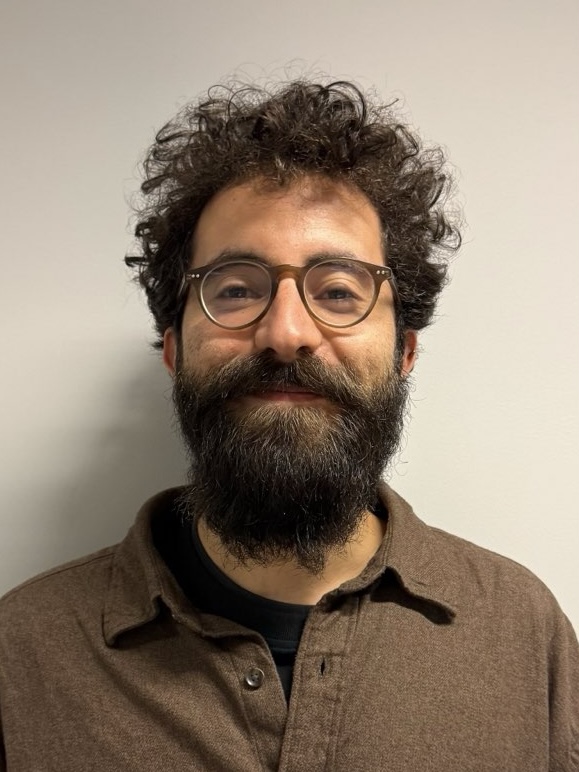
Francisco Teixeira is a PhD candidate at Católica Global School of Law (Lisbon), where he obtained his Bachelor’s in Law and Master’s in Administrative Law, with a dissertation focused on freedom of expression and post-structuralist theories of discourse. He has taught at Católica as a guest assistant in the modules of Fundamental Rights and Constitutional Justice (2021-2024), Foundations of Public Law (2022), as well as a course on Human Rights: Theory and Protection (2025) for the PPE degree in the Faculty of Social Sciences.
His doctoral research focuses on put-back claims in the DSA private enforcement framework, framing them, despite their individualistic, rule of law-background, as an agonistic tool that can be repurposed to further collective values in line with a multistakeholder approach to social media governance, so long as certain theoretical and sociological obstacles in the way of their judicial viability and academic favorability are addressed. Highlighting the technical and historical collective aspects of fundamental rights adjudication, the goal is to revitalize individual redress and remedy through their strategic leveraging (drawing on precedents, for example, of climate change litigation), not to serve as a miracle antidote for the host of pressing concerns on social media governance, but rather as a missing link of contestation and individual empowerment that can be made to serve public purpose considerations and to enact systemic change.
At IViR, the focus will be two-fold: intensive writing to finish the dissertation, but mostly enjoying the collective expertise of its’ researchers to test the main proposals and the broader frameworks on social media governance and Law and Technology.